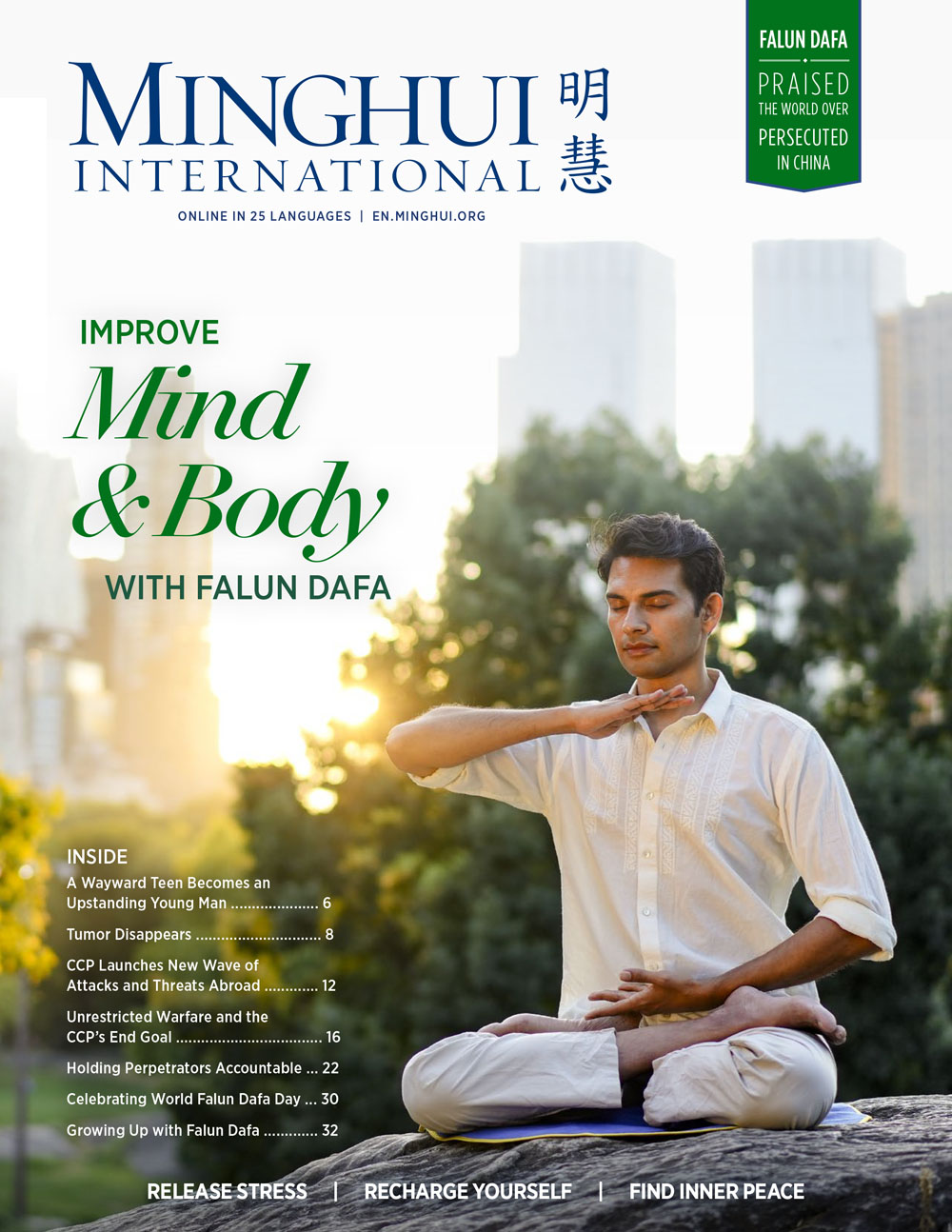

(Minghui.org) The annual Taiwan Falun Dafa Cultivation Experience Sharing Conference was held in Taipei on October 18, 2026. Over 5,000 Falun Dafa practitioners participated. Among them were young practitioners, many of whom started practicing along with their parents. Many others found Dafa later, while living their daily lives. Several college students shared their experience of adhering to Dafa’s principles while facing academic pressure and conflicts with others.
Persevering in Cultivation and Letting Go Of Attachments
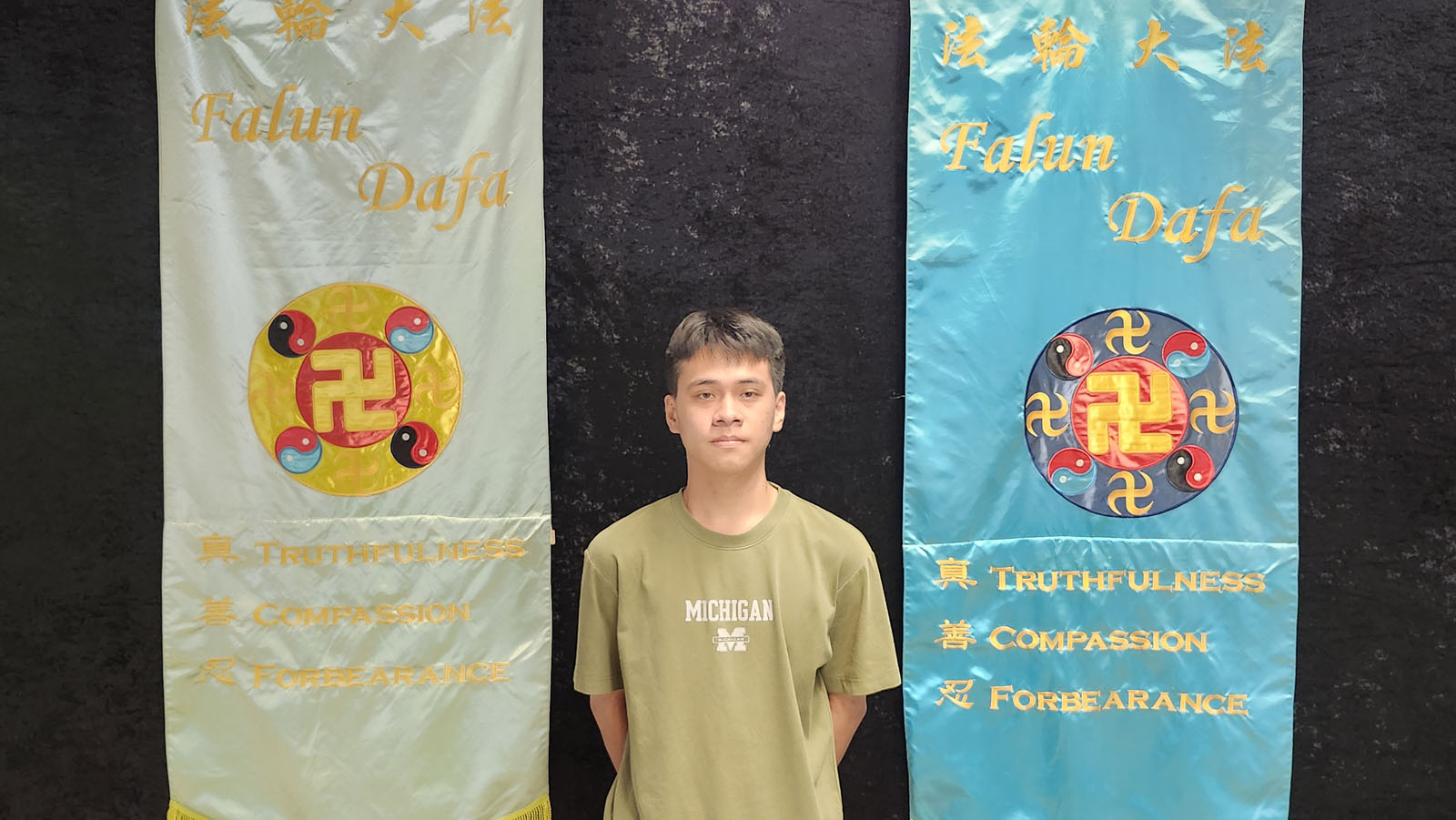 Lin Cheng-yan was encouraged by the conference sharings. (Minghui.org)
Lin Cheng-yan, a senior in college, said he realized his shortcomings from listening to the sharings. He started practicing Dafa with his parents when he was five. What touched him most was the perseverance of practitioners in cultivation.
Cheng-yan said that practitioners working in a media project were able to complete lots of articles amidst loneliness and solitude by realizing the importance of assisting Master in Fa-rectification. He remarked that this encouraged him greatly. Cheng-yan also experienced feelings of loneliness and solitude, as there are few fellow practitioners at his college. After listening to the sharing, he said he was inspired to keep going in cultivation.
He said, “Several practitioners did great work, but showed humility. For me, when I did a little thing, I would show off. Their sharings humbled me.”
He said practicing Dafa helped him with academic pressure, as Dafa teaches that in the face of difficulties, one should be considerate and tolerant.
Cheng-yan shared that during his final year of high school, as students prepared for university, the academic pressure was immense. He worried about getting good scores, and became anxious. But when he recalled the principle of following the course of nature, he let go of those anxious thoughts. He realized that he paid too much attention to others’ opinions and that he had an attachment to gain and loss. He said, “In letting go of the attachment to gain and loss, don’t think much about it, but just do the work. In this way, we can learn well and get a better result than expected. When we don’t pay attention to others’ opinions, we will not be affected by others and we’ll see our direction clearly.”
Chen-yan also shared that while working on a special course topic, some group member did not take on their share of the workload, and a diligent member suddenly dropped out. He calmly thought about what he could do in such a situation. Chen-yan did not complain and was considerate toward his group members. Instead of reacting, he stepped in to make up for the shortfall himself. As a result, he became more tolerant of others, thereby resolving potential conflicts with classmates.
Improving Cultivation Environment and Experiencing Kindness
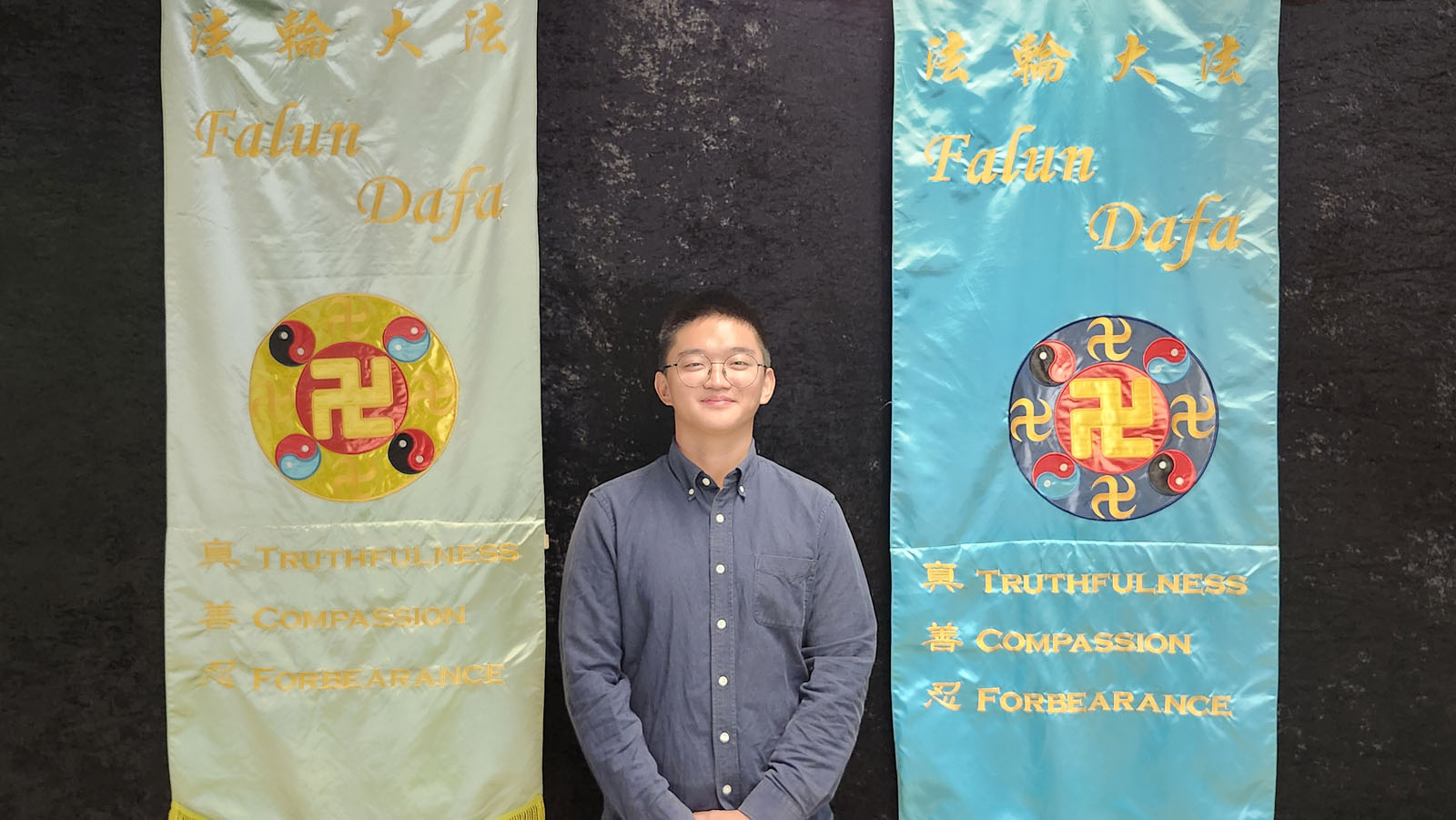 Cai Chi-en understands the importance of a cultivation environment. (Minghui.org)
Cai Chi-en, a second-year undergraduate student, found himself deeply moved as he listened to practitioners share their experiences—so much so that he couldn’t help but shed tears. Throughout their accounts, he came to realize the vital importance of studying the Fa, looking inward, and maintaining a supportive environment for spiritual practice. He shared that he was particularly moved by the contribution of a practitioner who writes numerous articles for the media, and by two young practitioners whose words served as encouragement for him to strive to do better in the future.
Chi-en first encountered Dafa in junior high school and remarked that the practitioner who manages to persist in writing articles for the media—often working entirely alone—is truly remarkable. He said that after going to college, he left his earlier cultivation environment behind and that it was hard to continue practicing. So he set up a Falun Dafa club on campus, with the aim of creating a cultivation environment for young practitioners.
The remarks made by two young practitioners surprised Chi-en. He said, “Seeing them show such courage by taking the stage, at such a young age, encouraged me to be bolder—whether in the process of founding an organization or in the course of clarifying the truth—even when facing individuals who hold different viewpoints.”
He said that practicing Dafa led him to realize the importance of kindness. He shared that during Fa study, when facing issues in interaction with other members, he had the presence of mind to tolerate differences and be considerate. He applied the principles of Truthfulness-Compassion-Forbearance when problems arose, and the group members began to treat each other sincerely and became harmonious.
Distinguishing Good and Evil
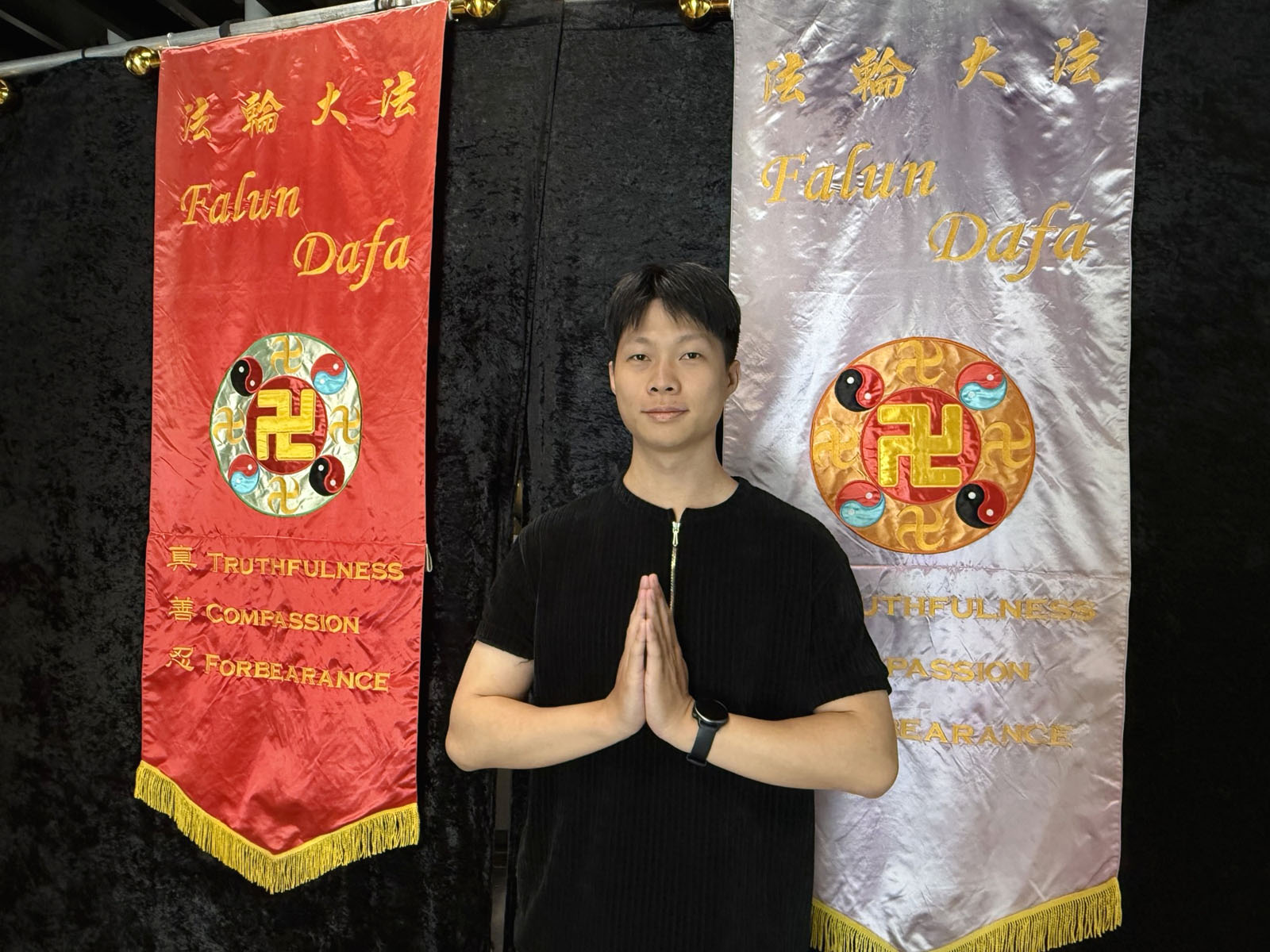 Li Chia-heng (Minghui.org)
Li Chia-heng began practicing Dafa with his mother. He graduated from university two years ago and works in mechanical design and development. Chia-heng said he was inspired by the sharings at the conference: “A practitioner talked about how while navigating a sickness karma trial, he maintained righteous thoughts and a calm demeanor, looked inward while enduring physical suffering, and thus engaged in genuine cultivation. It was truly admirable. I have had similar experiences, yet I found that my state of mind could still waver when faced with such hardships. The practitioner’s sharing served as a timely reminder for me.”
He recalled that, as a student, his academic scores did not meet his parents’ expectations. He argued with his parents over ti. Then he remembered that practitioners should follow the principles of Truthfulness-Compassion-Forbearance and be kind to others, especially to one’s parents. As a result, he has a more peaceful attitude toward his parents, who commend him for becoming more composed and sensible.
Chia-heng said, “Because of my spiritual practice, I have an internal yardstick—a moral standard by which I measure everything. I can clearly distinguish between good and evil, and I do not simply follow the crowd. My friends are aware of my practice, so they know better than to ask me to do anything that goes against my principles. They feel completely at ease in my company and have full trust in my character.”
He said that cultivation benefits him greatly, and that he often has a new understanding while studying Dafa’s teachings and can see his own shortcomings. After improving his xinxing each time, he then has a higher-level understanding when he re-reads the same teaching. Chia-heng said, “My journey from having a volatile temper and impatient nature to becoming mentally mature and composed has been shaped by the guidance and insights I’ve gained from the Fa—all of which have helped me become a better person.”
Comparing in Studying and Cultivation
 Lin yu-chen (Minghui.org)
Lin yu-chen, a third-year undergraduate student, started cultivation with her parents at a young age. She said she was moved by the sharings at the conference: “Several practitioners shared how to pass tests within the family environment. Young practitioners shared their experiences of improving xinxing. This helped me see my gaps in cultivation.”
Yu-chen said that a practitioner who works in a media project shared that he joined the project when he returned from living abroad for over 20 years. She was impressed by the practitioner saying that if he had another chance to make a life choice, he would make the same choice. Yu-chen shared that she is at a crossroads in life and has gained a deeper realization of the seriousness and preciousness of cultivation, as well as the magnificence and glory of validating Dafa, which will guide her choice.
She said that spiritual cultivation must be integrated into daily life. In the past, when she performed good deeds, she was still driven by a desire for fame—seeking validation and wanting to be well-liked by others. Through studying the Fa, she identified her attachments and human-centered mindset, and realized that cultivation should be based on non-action and that one must not harbor a desire for personal gain or a specific outcome.
Yu-chen shared that she collaborated with another practitioner on a Dafa project. Things did not go smoothly, and a rift developed between them. Realizing the importance of looking within, Yu-chen took the initiative to write a letter acknowledging her own faults. Their relationship was soon restored.
Yu-chen feels incredibly fortunate to have grown up in a family of Dafa practitioners. She hopes that more people with a predestined connection will learn about Dafa. She frequently introduces Dafa and Shen Yun to her classmates and teachers. Her professors are impressed by her steadfast belief. Several faculty members and students saw Shen Yun after she told them about upcoming performances.
Copyright © 1999-2026 Minghui.org. All rights reserved.