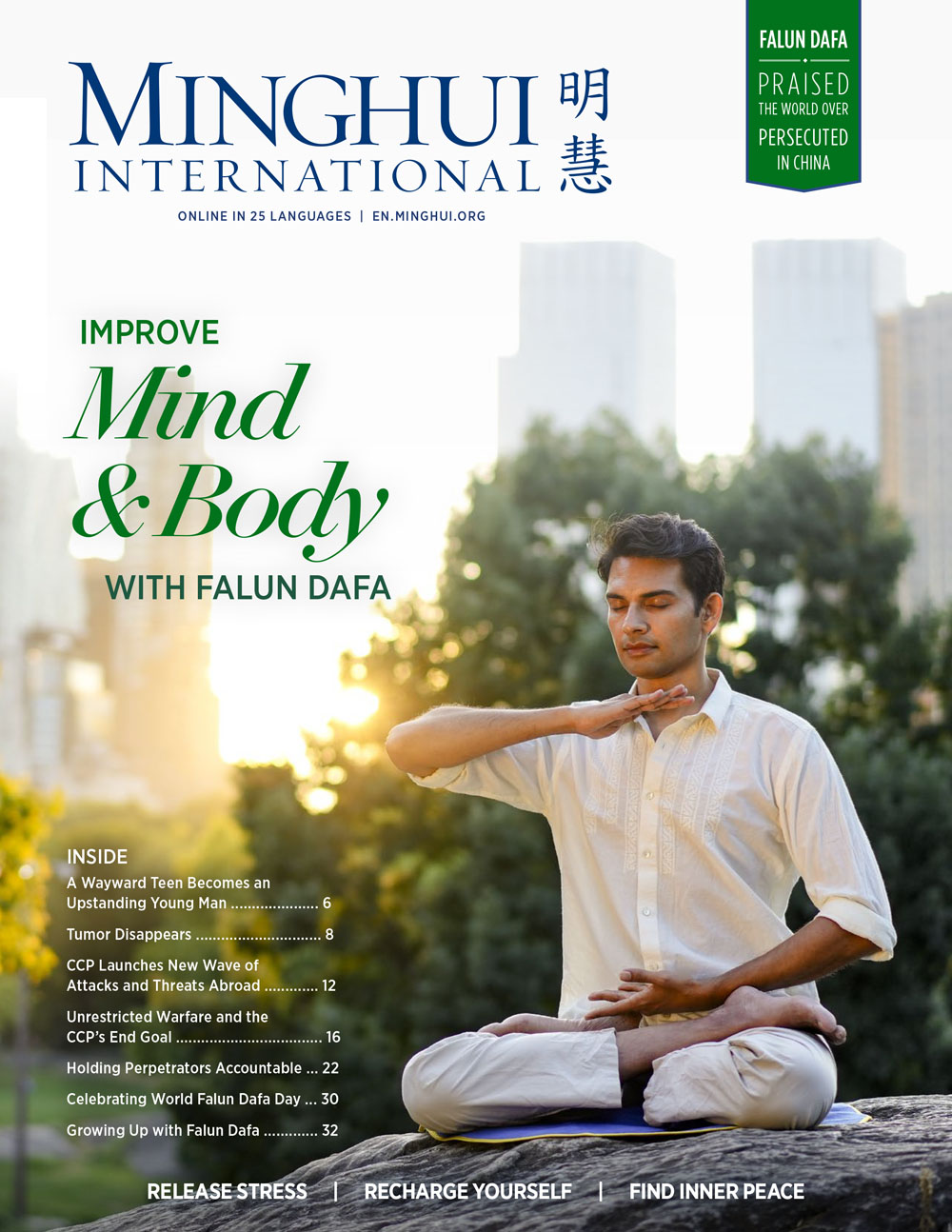

(Minghui.org) The 2026 Australian Falun Dafa Experience Sharing Conference was held in Melbourne on October 25, 2026. More than 1,000 Falun Dafa practitioners from Australia and adjacent areas participated in the annual conference.
Twenty-two practitioners of different cultural backgrounds and ages shared their experiences in life, work, and clarifying the truth about the persecution. They talked about how they followed the Fa, are considerate, and are guided by the principles of Truthfulness-Compassion-Forbearance, look within, eliminate attachments, and improve their xinxing.
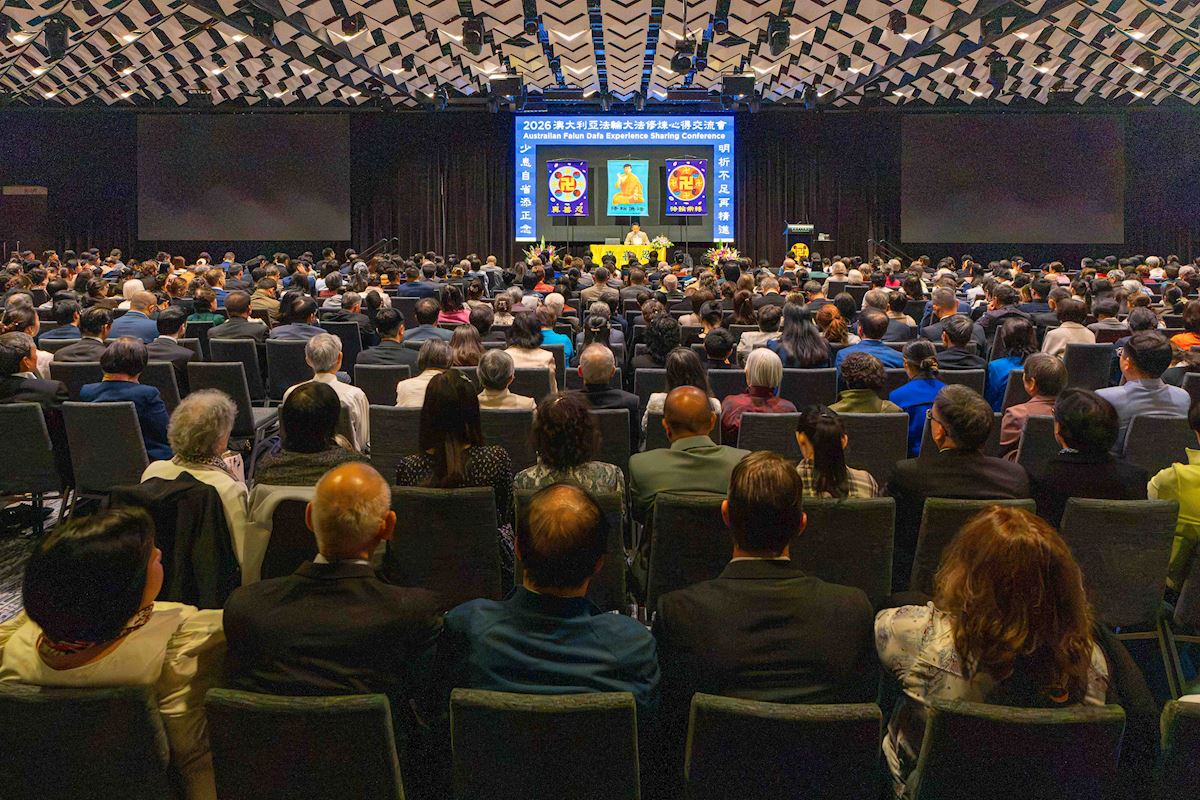
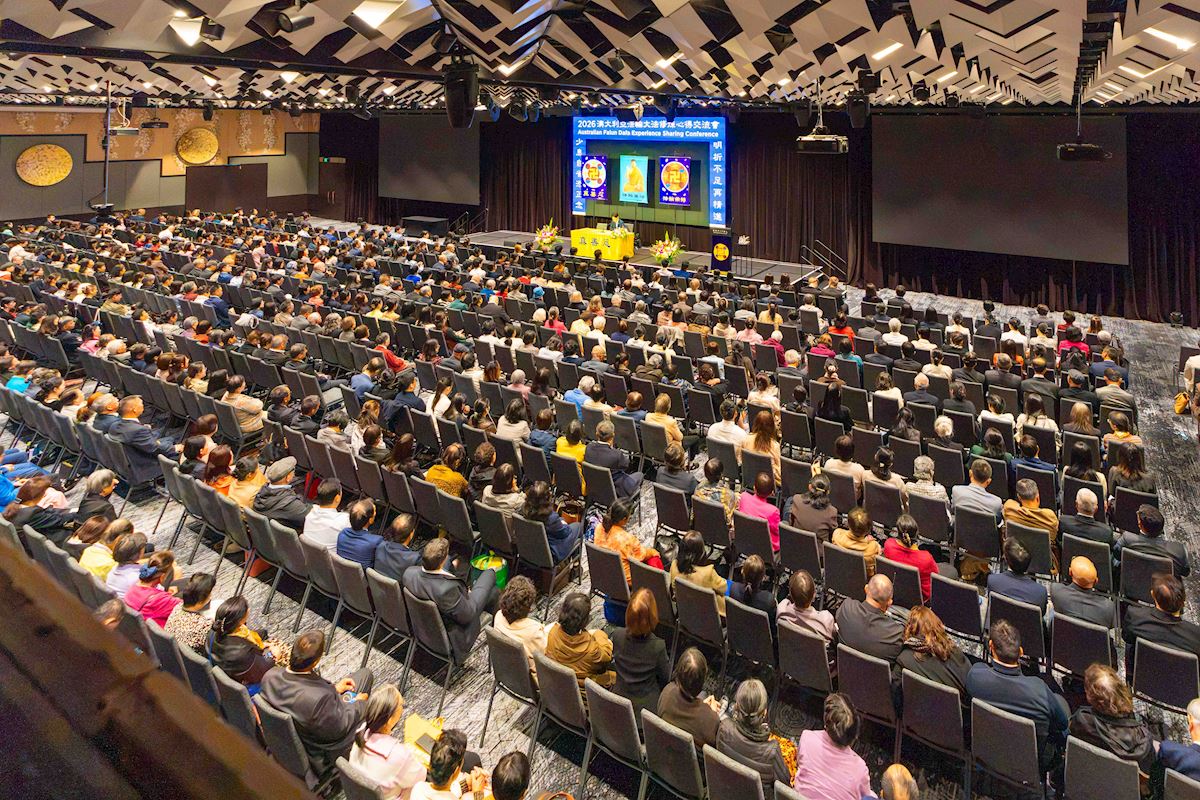 The 2026 Australian Falun Dafa Experience Sharing Conference was held in Melbourne on October 25, 2026. (Minghui.org)
Looking Within During Conflicts
Harrison from Sydney talked about how he introduced Falun Dafa in college. He’s practiced Dafa for four years. When the other students looked at him strangely or mocked him, he felt discouraged and resented that he was in such a difficult environment. Through studying the Fa and reflecting on himself, he realized that these are opportunities to eliminate attachments and improve his xinxing, and that he should learn to communicate with others calmly and clarify the truth about the persecution. He also realized that taking responsibility was not taking a position but that he was supporting other practitioners, cooperating with others, and helping more young practitioners participate in truth-clarification on campus.
Harry said he experienced a xinxing test when he coordinated the screening of the documentary Unbroken. When work did not progress smoothly, or other practitioners offered differing opinions, he sometimes felt dissatisfied. He thought that since he contributed more, others ought to follow his ideas. When he reflected and looked inward, he realized that he felt imbalanced, had a competitive spirit, and a desire to validate himself. He had a candid discussion during group Fa study and apologized to the other practitioners. He realized that having more experience is no justification for disregarding the views of others. Instead, it’s an opportunity to truly let go of his ego, learn to listen, and cooperate with others.
John de Buaex, a practitioner from Western Australia, reflected on his mindset when he participated in the Art of Zhen Shan Ren (Truthfulness, Compassion, Forbearance) International Exhibition. The first time he served as a primary coordinator, he sought attention and recognition. On the day of the opening ceremony, seeing other practitioners take on roles such as hosting or coordinating, he felt a sense of disappointment and overlooked the genuine efforts other practitioners contributed.
Thirteen years later, when he participated in the exhibition again, he was no longer attached to being a coordinator. Instead, he was happy to simply be a member of the team. Through discussions, studying the Fa, and talking about their clearly defined responsibilities, the group harmoniously worked together. He also re-examined his attachments and began to appreciate the help he received from other practitioners—he realized that by changing himself, he could view others more objectively and integrate better.
Cultivation in Work
Nhung Le, from Hobart, talked about how she clarified the truth while working in early childhood education and participating in community markets. When she first started her job, she believed that being hardworking and diligent was enough. However, a colleague pointed out that she appeared distant and acted more like an “automated machine.” She realized that while she was conscientious in her duties, she rarely showed genuine care for her colleagues—her behavior was rooted in arrogance and ego.
After realizing her shortcomings, Nhung began to show care for her colleagues, humbly seek their advice, and appreciate their strengths. As a result, her relationships with them gradually improved. When she participated in a community market on her own, she was initially apprehensive that sharing information about the persecution might be poorly received.
However, after studying the Fa and reflecting on the situation, Nhung reached out to the organizers to explain what Falun Dafa is and the reality of the persecution by the Chinese Communist Party (CCP). She was able to secure a free booth. She came to understand that one should not refrain from sharing information out of fear or concern that others might have negative thoughts. Rather, one ought to approach people with patience and sincerity.
Julia Yi shared her experiences while reaching out to the community to raise awareness about the persecution. In her earlier interactions with elected officials, she sometimes rushed to present a large volume of facts about the persecution all at once, hoping for an immediate show of support. She later realized that building trust is a gradual process; she began participating consistently in community events, learning to listen and observe, and she tailored her conversations to each individual.
On one occasion, nearly 70 people signed up to learn Falun Dafa, but few people actually showed up. This prompted her to reflect on her own attachments, specifically, her preoccupation with outcomes and a concern for saving face. She recognized that the significance of an activity cannot be measured solely by immediate results. Later, many individuals visited the booth.
Improving Oneself
Emma Hall from Melbourne has participated in a Dafa project for years and shared her experience of relocating to a rural area in Victoria. Her cultivation environment was bad because there were no practitioners in the area. She realized that she should not rely on others to create the environment—instead, she had to take the responsibility herself. She started a practice site and improved her cultivation state by studying the Fa, doing the exercises, and sending forth righteous thoughts.
While participating in the online Falun Dafa teaching program, she encouraged the team to dedicate more time to group Fa-study and to talking about their cultivation experiences, allowing everyone to discuss challenges they encountered in their work and daily lives. She realized that a cultivation environment requires collective effort. As everyone continued to improve in their cultivation, the effect of their efforts improved, and the online teaching program helped more individuals learn about Falun Dafa.
William Zhang from Sydney, who is involved in research work, harbored a sense of unfairness after others took credit for his hard-earned research findings. He began to reflect on his attachment to fame, personal gain, and his own contributions. In subsequent collaborations, he stopped fixating on the order of authorship and instead focused on improving the quality of the research papers, which, in turn, led to even better outcomes.
While working on video production for the July 20 activities in Sydney, he also found himself becoming impatient over issues concerning source materials, drafts, and audio recordings. A coordinator encouraged him to study the Fa. William calmed down and looked inward; he realized that he was driven by an eagerness for quick results, an aversion to trouble, and a desire for recognition. He reorganized the materials and, with the cooperation of other practitioners, completed the video. He realized that when faced with difficulties, one should first focus on doing one’s own part well.
Young Practitioners’ Cultivation Experiences
Zhang Shuo, 11 years old, from Melbourne, said he had a disagreement with his teacher. When the teacher challenged his views, he felt he needed to explain himself, and his frustration grew. He later reflected on his eagerness to prove he was right, and realized he had no forbearance. He also realized that when faced with differing opinions, he should calm down, express his thoughts patiently, and approach the other person with understanding and tolerance.
He also shared the documentary Unbroken with another teacher, who was influenced by negative information and criticized Falun Dafa and Shen Yun. After watching the film, the teacher gained a better understanding of the situation. Zhang realized that clarifying the truth requires patience and sincerity, as well as allowing others the time they need to learn the facts.
Edward Li, a 13-year-old practitioner from Sydney, said he became addicted to video games during a music summer camp. Away from his parents’ supervision, he spent increasing time on gaming, to the point where it began to interfere with his music practice and rest.
He realized that because practicing music and studying require long-term persistence without immediate, visible results, he used video games as a way to escape these challenges. He reminded himself to distinguish between a genuine need for rest and an unwillingness to face difficulties, and he prioritized his responsibilities. He realized that there is a gap between grasping the principles of cultivation and actually putting them into practice. One must learn to exercise self-discipline, even when no one is watching.
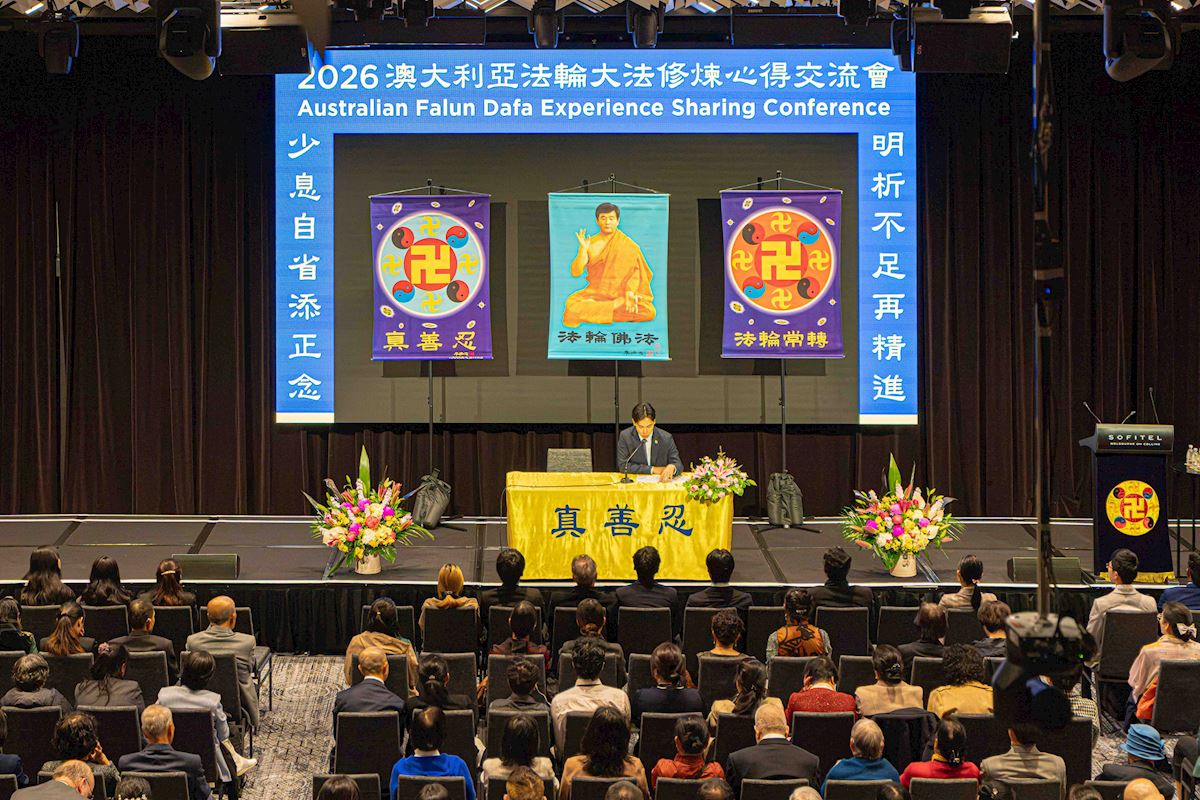
 Practitioners talk about their cultivation experiences. (Minghui.org)
Copyright © 1999-2026 Minghui.org. All rights reserved.